
Technology
Natural refrigerants, explained for data centers
You do not need to know industrial refrigeration to use it. Here is what the technology is, how it applies to a data center, and how it answers the problems operators face.
The short version
A proven way to move a great deal of heat
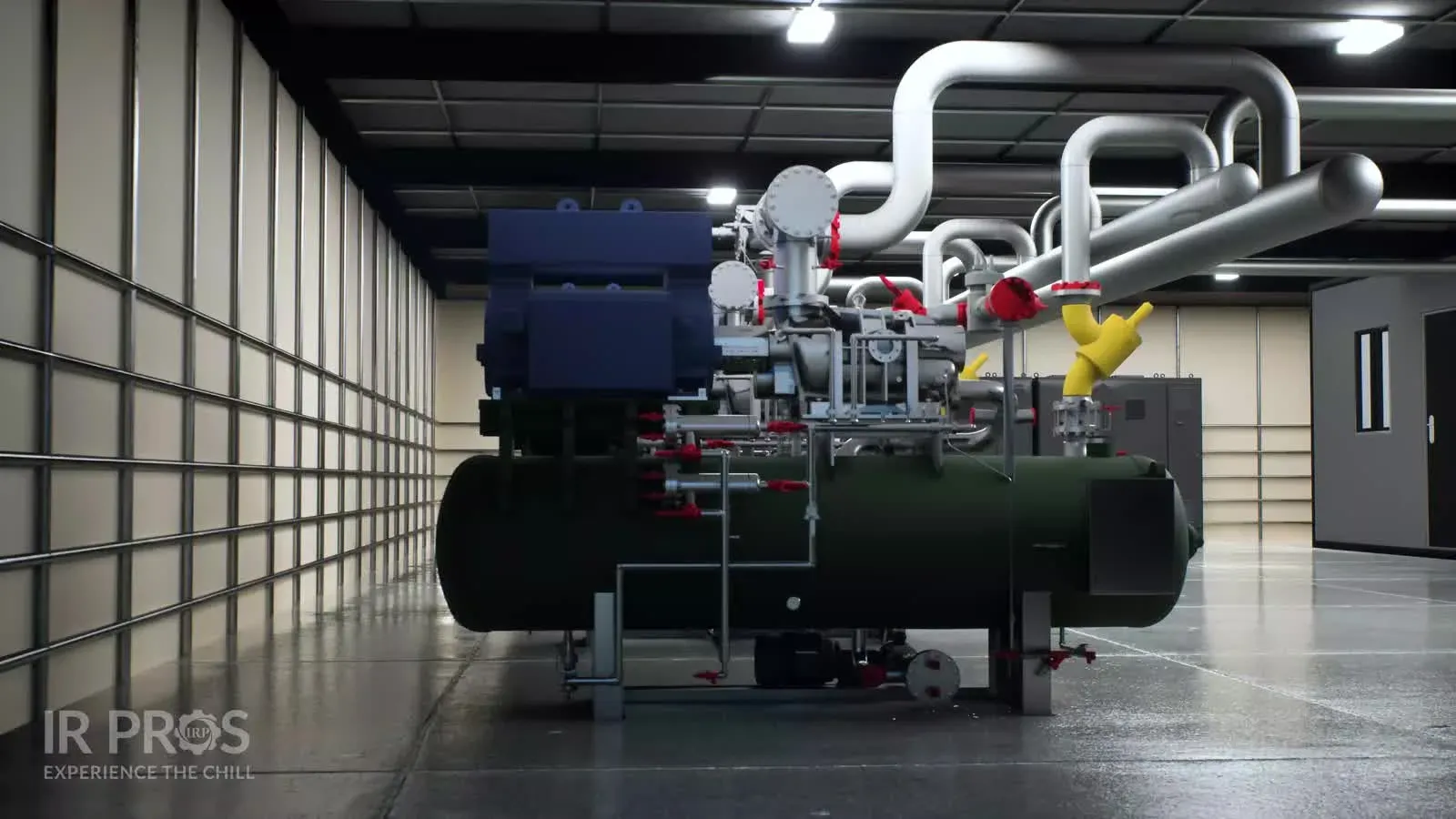
A data center cooling plant has one job: take heat out of the building and put it somewhere else, all day, every day. Industrial plants have done exactly that for food processing and cold storage for generations, using refrigerants that occur in nature. We apply the same engineering to data centers.
"Natural refrigerants" is the plain-language name. The two that matter here are ammonia and carbon dioxide.
R-717
Ammonia
A compound of nitrogen and hydrogen that occurs in nature. It moves more heat per pound than any synthetic refrigerant in common use, which is why heavy industry has relied on it for large, continuous cooling loads for generations.
It is toxic at high concentrations and has a sharp smell at very low ones, so systems are designed to keep it contained in the plant and to detect any release early.
R-744
Carbon dioxide
The same gas found in the air. As a refrigerant it is non-flammable and has low toxicity, and it runs at much higher pressures than other refrigerants, so the equipment is compact and purpose-built.
It is often used where refrigerant must run close to people or product, and it rejects heat at temperatures that are useful for heat recovery.
Synthetic refrigerants
Freon and HFO
Manufactured chemicals. "Freon" is the everyday name for the older fluorocarbon families, including the HFCs used in most data center chillers today. HFOs are the newer, lower-impact replacements.
They are familiar and easy to apply at small scale. HFCs are being phased down by regulation, which affects cost and supply over the life of a plant.
How they compare
The differences that matter when choosing a cooling plant.
| Attribute | Ammonia (R-717) | Carbon dioxide (R-744) | Freon or HFO |
|---|---|---|---|
| What it is | Naturally occurring compound | Naturally occurring gas | Manufactured chemical blends |
| Global warming potential* | 1 or less | 1 | R-410A, a common HFC: 2,088. HFOs are far lower. |
| Safety class (ASHRAE 34) | B2L: higher toxicity, lower flammability | A1: lower toxicity, non-flammable | Mostly A1, or A2L for many newer blends |
| Operating pressure | Moderate | Very high | Moderate |
| Where it is strongest | Large central plants and continuous loads | Occupied or sensitive spaces, and heat recovery | Smaller packaged equipment |
| Regulatory outlook | Not subject to phase-down | Not subject to phase-down | HFCs are being phased down |
*Global warming potential compares a gas with carbon dioxide, which is 1. Values from the U.S. EPA reference table cited below.
In a data center
The refrigerant stays in the plant. Chilled water goes to the hall.
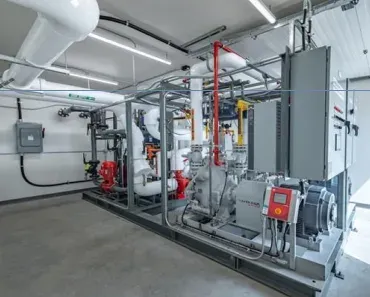
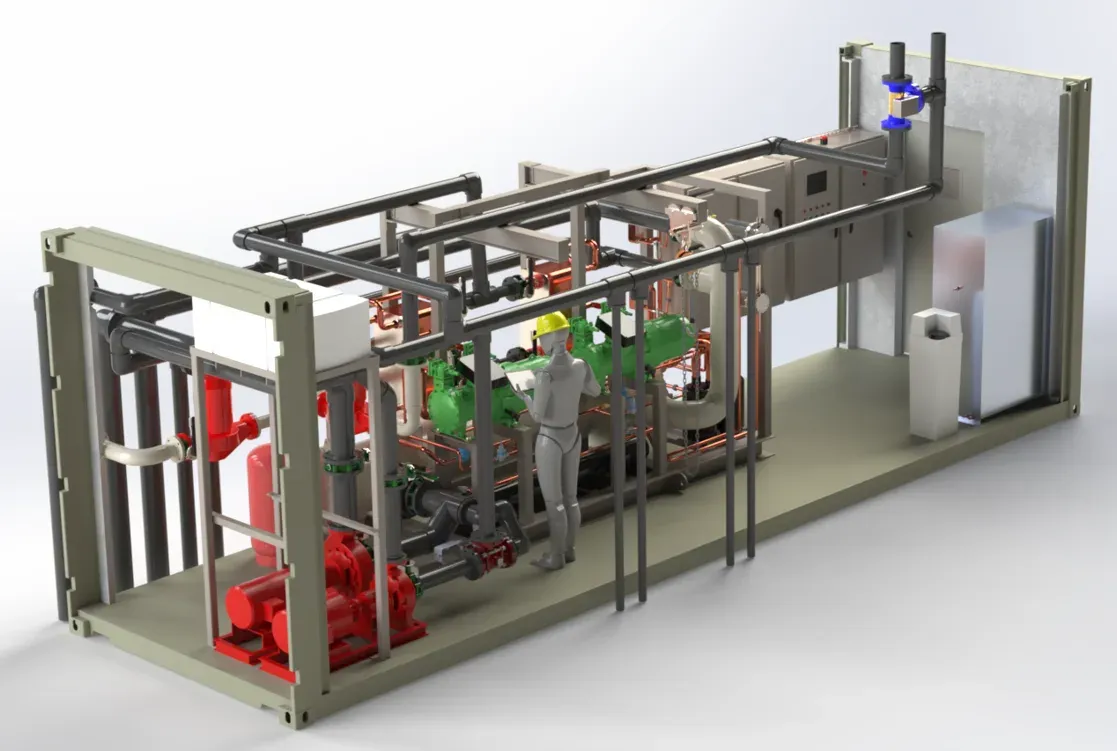
The refrigerant never enters the data hall. It works inside a plant room or a factory-built skid, where it chills a water loop. That chilled water is what travels to the buildings, feeding liquid cooling loops and air systems the same way any chilled-water plant does.
Ammonia does the heavy lifting in central plants and larger modular skids, where its capacity suits campus-scale loads. Carbon dioxide fits where a non-flammable, low-toxicity refrigerant is preferred, as the working fluid in smaller systems or paired with ammonia so that each is used where it is strongest.
From the data hall's side, nothing unusual is required: supply and return chilled water at the temperatures your IT equipment needs.
Your problem, not our terminology
What it solves for an operator
Power is the limit on the site
Every kilowatt the cooling plant does not use is a kilowatt available for IT load. Large industrial plants are designed around efficient, steady operation.
Water is scarce or restricted
Plants can be designed around air-cooled, adiabatic, or hybrid heat rejection to reduce reliance on cooling-tower water.
Refrigerant rules keep changing
Natural refrigerants are not part of the HFC phase-down, so a plant built today is not planned around a future refrigerant change.
Heat reuse is expected
A central plant collects heat in one place, at temperatures that can serve district heating, greenhouses, and aquaculture.
Rack density keeps climbing
Central plants and modular skids deliver chilled water to liquid cooling loops and high-density air systems, and capacity can be added as halls fill.
Safety
Safety is engineered in, then maintained
Natural refrigerants have a long safety record in industry because the systems are designed, operated, and inspected to well-established standards. The same discipline applies on a data center site.
- Refrigerant stays in the plant room or on the skid. Chilled water, not refrigerant, goes to the data hall.
- Low-charge designs hold a small fraction of the refrigerant that older industrial systems carried.
- Continuous leak detection tied to alarms, ventilation, and automatic isolation.
- Machinery rooms built with dedicated ventilation, emergency controls, and restricted access.
- Designed, inspected, and maintained to IIAR standards and the applicable safety regulations.
- Operators and technicians trained and certified on the system as installed.
Reliability and operations
Designed to keep running, and to be worked on while it does
Industrial cooling serves processes that cannot stop. That shapes how the equipment is built and how the plant is laid out.
- Industrial compressors built for continuous duty and for rebuilding in place, not replacement.
- N+1 and higher redundancy on compressors, pumps, and heat rejection.
- Equipment that can be isolated and serviced while the rest of the plant carries the load.
- Controls that trend performance, stage equipment, and alarm early.
- Remote monitoring backed by field technicians from the IR Pros service network.
- Documented inspection, testing, and maintenance for the life of the plant.
Efficiency
Where the efficiency comes from
Results depend on the site, the climate, and the load, and your engineer will model them for your project. These are the reasons an industrial plant can use less energy to move the same heat.
Built for steady, large loads
A data hall runs around the clock at a fairly constant load. That is the profile industrial plants are designed for, with variable-speed compressors, pumps, and fans that follow the load.
One plant instead of many units
A central plant replaces rows of small distributed units with a few large machines that can be staged and optimized together.
Free cooling when the weather allows
In cool weather the plant can reject heat with little or no compressor work.
Heat recovery
Heat that would be thrown away can be captured and sent to a neighbor or a district system.
What published sources say
Figures from third parties about the market and the refrigerants. They are not claims about any system we build.
Global data center electricity use was about 415 terawatt-hours in 2024 and is projected to reach about 945 terawatt-hours by 2030.
Source: International Energy Agency, Energy and AI, 2025
United States law directs an 85% phase-down of HFC production and consumption from baseline levels by 2036.
Source: U.S. Environmental Protection Agency, American Innovation and Manufacturing (AIM) Act
R-410A, a common HFC, has a global warming potential of 2,088. Ammonia and carbon dioxide are each listed at 1.
Source: U.S. Environmental Protection Agency, Technology Transitions GWP Reference Table
Planning a new hall, a retrofit, or a service change?
Tell us about your facility. An engineer will follow up to talk through options.