
How it works
From the rack to the plant, and from first call to running system
Two flows: how the cooling system moves heat out of a data center, and how we deliver it.
Today
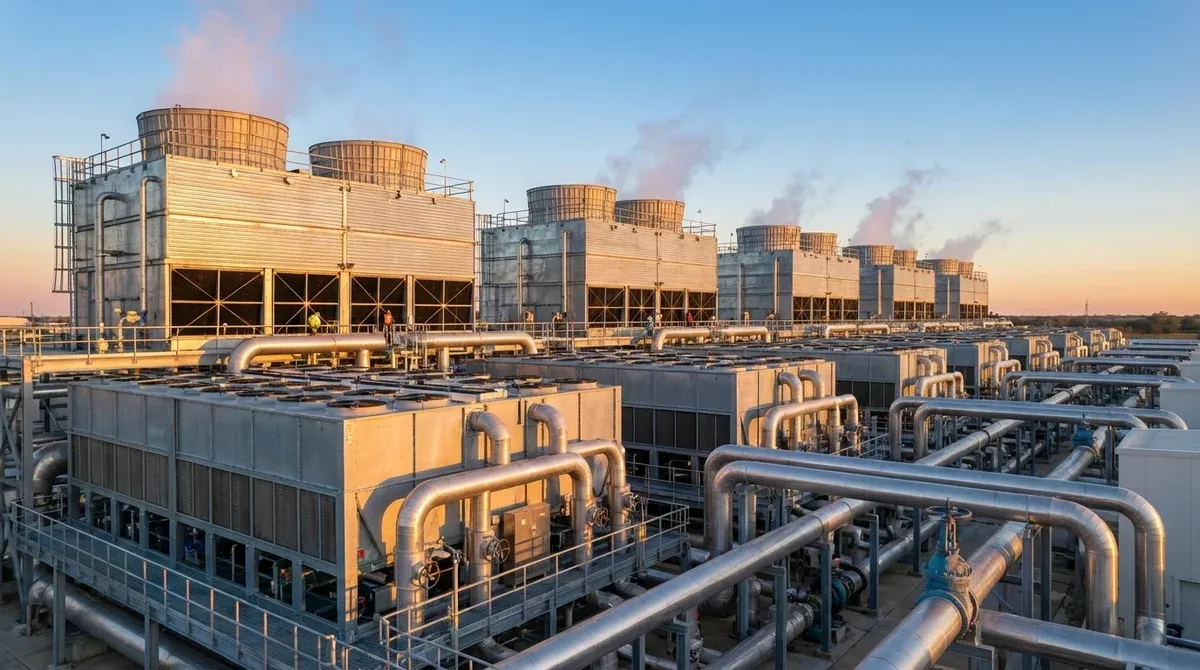
Rooftops and yards covered in distributed cooling units, each with its own refrigerant charge, power feed, and maintenance schedule.
Our approach
One engineered natural refrigerant plant, or a row of factory-built skids, replaces them and shortens the path to a running site.
The payoff
Power that is not spent on cooling is available for servers, and the heat you reject becomes something a neighbor can use.
Watch
See the central plant concept in motion
The system
How the cooling system works
Heat moves in one direction: out of the racks, through a chilled-water loop, into a natural refrigerant plant, and then to the atmosphere or to someone who can use it.
- Step 1Data hall
- Step 2Chilled-water loop
- Step 3Natural refrigerant plant
- Step 4Heat rejection or reuse
Heat leaves the racks
Servers and GPU clusters reject heat into liquid cooling loops and high-density air systems in the data hall.
Chilled water carries it away
A chilled-water loop moves that heat out of every building on the campus to the cooling plant.
Natural refrigerants do the work
One central plant, or a row of modular ENVIROFREEZE® skids, chills the loop using all natural refrigerants.
Heat is rejected or reused
Heat leaves through air-cooled, evaporative, or adiabatic equipment, or is recovered for greenhouses, district heating, and aquaculture.
Controls watch everything
Remote controls trend performance, schedule equipment, and send alarms so operators and our service teams can act early.
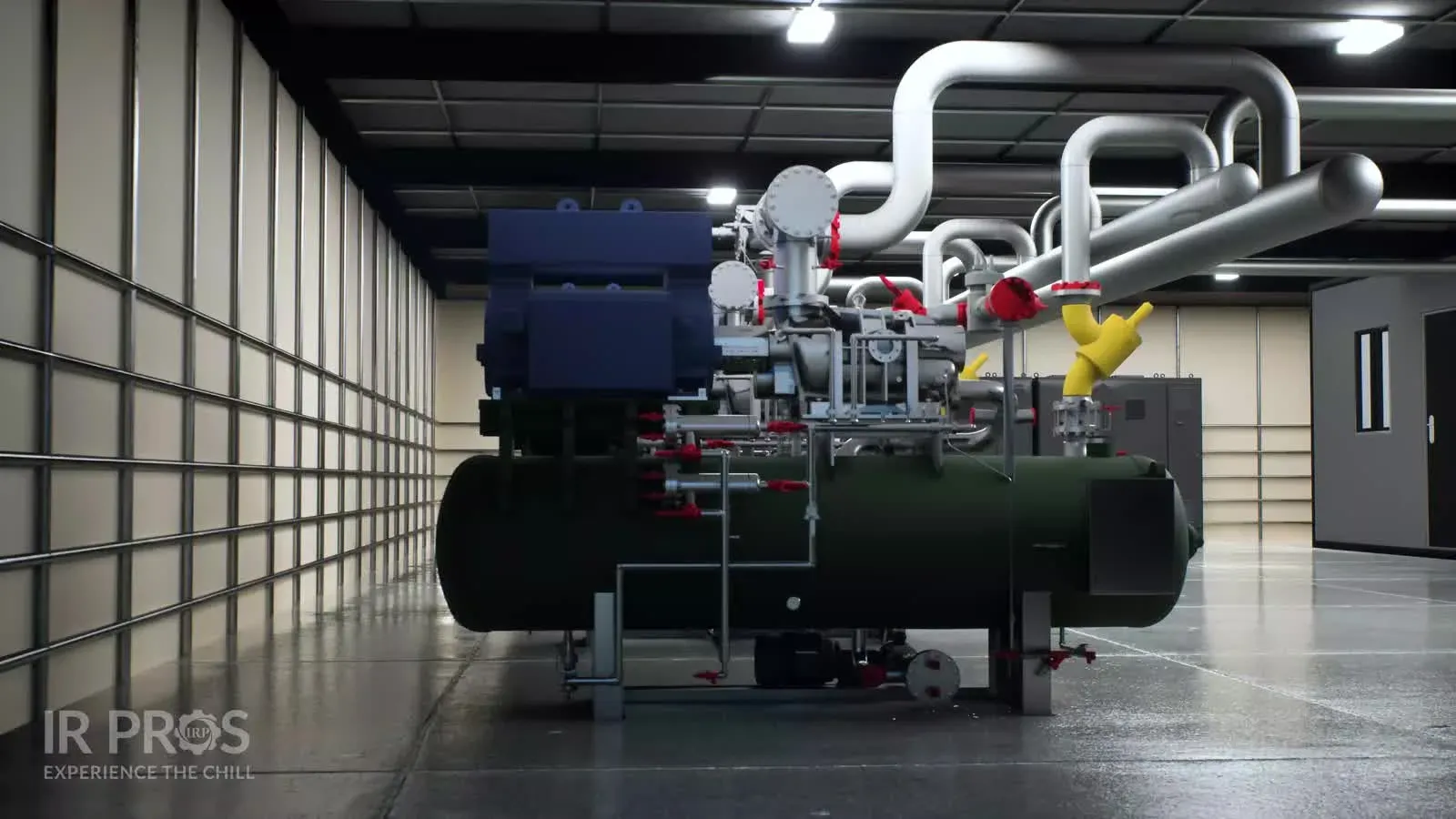
Central plant
One plant serves every building on the campus through the chilled-water loop.
Central plant capabilities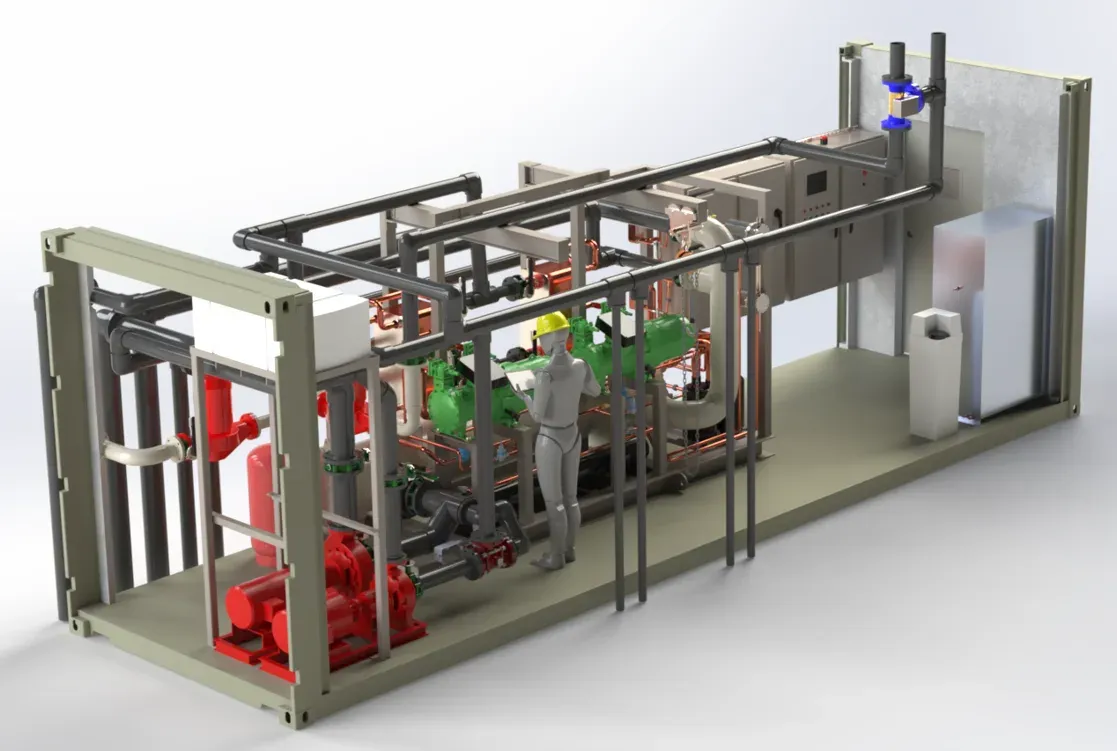
Modular skids
Factory-built ENVIROFREEZE® units are added in steps as the load grows.
Explore ENVIROFREEZE®The project
How a project runs
One team carries the work from the first load model to the service agreement, so nothing is lost at a handoff.
Assess the load
We model the thermal load, redundancy needs, site constraints, and growth plan with your team.
Choose the approach
Central plant for a campus, modular skids for phased growth, or a combination matched to the site.
Engineer the system
In-house engineering, electrical, and controls design, coordinated with your design team, with safety and compliance built in.
Build and integrate
Equipment is integrated into skids that are fabricated, wired, and tested in the factory in parallel with site work.
Install and insulate
IR Pros field crews set, pipe, wire, and insulate the equipment on site.
Commission
We test the system against the design, including failure scenarios, and train your operators.
Service for life
Preventive maintenance, remote monitoring, and emergency response from the IR Pros service network.
Want to walk through it for your site?
Tell us about your load and your schedule. An engineer will follow up to talk through options.