
Ammonia vs. CO2 vs. HFC: Choosing the Right Refrigerant
IR Pros Team
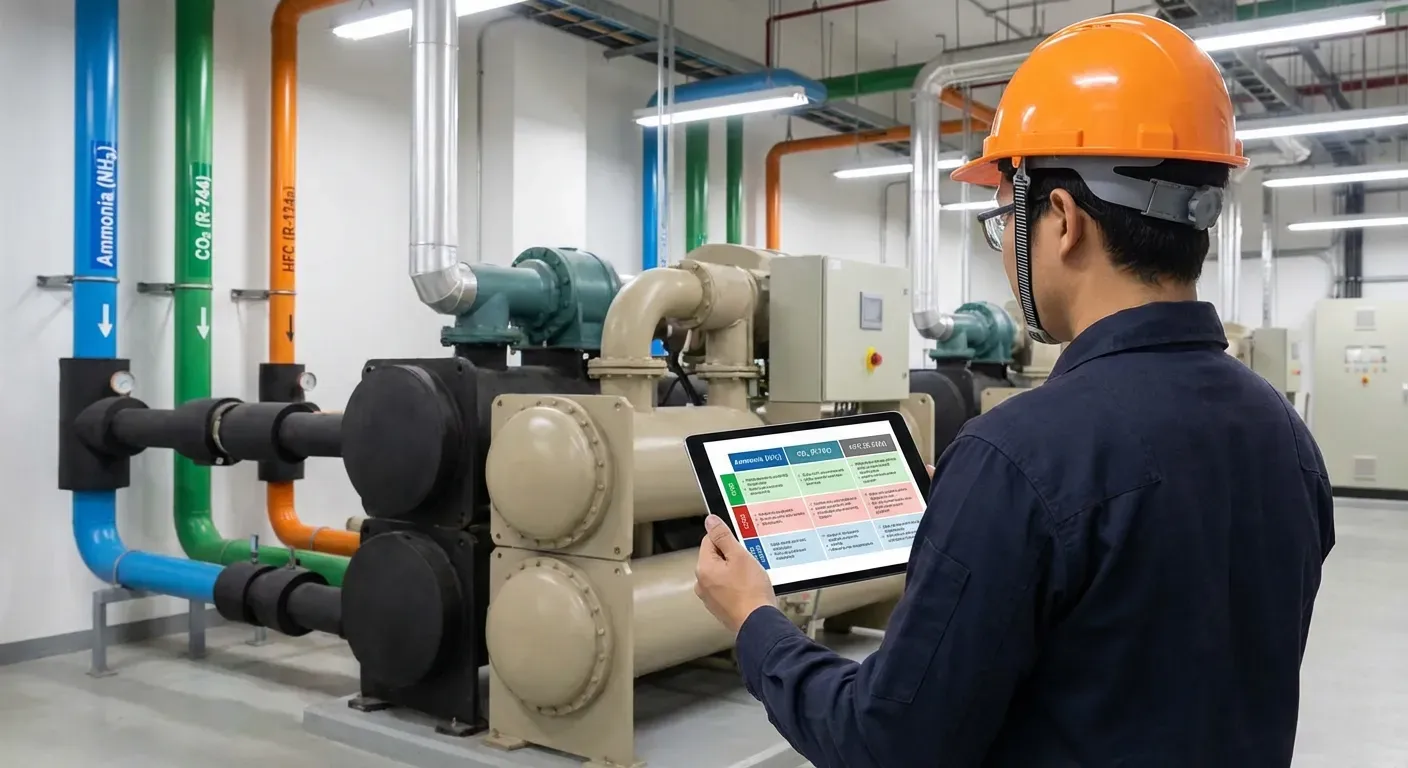
Selecting the right refrigerant is one of the most critical decisions in the design of a new industrial refrigeration system. The choice impacts your energy efficiency, regulatory compliance burden, safety protocols, and long-term operating costs.
Historically, Ammonia (NH3) was the undisputed king of industrial refrigeration. Today, however, CO2 (Carbon Dioxide) has emerged as a strong contender, and HFCs (Hydrofluorocarbons) still have a niche, though they are facing regulatory phase-downs.
Here is a breakdown of the three primary contenders to help you understand which might be right for your facility.
1. Ammonia (NH3 / R-717)
The Gold Standard for Efficiency
Ammonia has been used for over a century and remains the most energy-efficient refrigerant available. It has zero Ozone Depletion Potential (ODP) and zero Global Warming Potential (GWP).
Pros:
- Unmatched Efficiency: superior thermodynamic properties mean lower electricity bills.
- Low Cost: Ammonia is inexpensive and readily available.
- Environmentally Friendly: Completely natural and future-proof against environmental regulations.
- Self-Alarming: Its strong odor acts as an immediate warning of a leak.
Cons:
- Toxicity: It is toxic in high concentrations. This requires strict safety protocols and, for large systems (over 10,000 lbs), compliance with OSHA PSM (Process Safety Management) and EPA RMP (Risk Management Plan).
- Material Compatibility: It is corrosive to copper, so systems must be built with steel or stainless steel.
Best For: Large cold storage warehouses, food processing plants, and distribution centers where efficiency is paramount and the facility can manage the safety program.
2. Carbon Dioxide (CO2 / R-744)
The Rising Star
CO2 is gaining massive popularity, especially in “transcritical” systems. Like ammonia, it is a natural refrigerant with negligible environmental impact (GWP = 1).
Pros:
- Safety: It is non-toxic and non-flammable. This removes the heavy regulatory burden of OSHA PSM.
- High Grade Heat Recovery: CO2 systems operate at high pressures and temperatures, making them excellent for reclaiming waste heat for hot water or underfloor heating.
- Compact: The high density of CO2 allows for smaller piping and compressors.
Cons:
- High Pressure: Systems operate at very high pressures (often > 1000 psi), requiring specialized components and training.
- Efficiency in Hot Climates: Traditional CO2 systems can lose efficiency in very hot ambient temperatures, though new technologies (ejectors, adiabatic condensers) are mitigating this.
- Complexity: The control strategies for transcritical CO2 are more complex than standard systems.
Best For: Supermarkets, smaller industrial facilities, freezers located in populated areas where ammonia safety risks are a concern, and facilities that need significant hot water (e.g., wash-down facilities).
3. HFCs (Hydrofluorocarbons) / HFO Blends
The Fading Incumbent
Synthetic refrigerants like R-404A or R-507 were once common alternatives to ammonia. However, due to their high GWP, they are being aggressively phased out by regulations like the AIM Act in the US and F-Gas regulations in Europe. Newer “low-GWP” synthetic blends (HFOs) are available but come with trade-offs.
Pros:
- Familiarity: Most technicians know how to work on these systems.
- Lower Initial Equipment Cost: Components are often cheaper and widely available (though this gap is closing).
- Safety: Generally non-toxic and non-flammable (though some newer A2L blends are mildly flammable).
Cons:
- Regulatory Risk: High-GWP HFCs are being banned or capped. Prices for these refrigerants are skyrocketing as supply dwindles.
- Future Uncertainty: Investing in an HFC system today is investing in technology with an expiration date.
- Leak Rates: Synthetic systems often have higher leak rates, which is becoming expensive and environmentally damaging.
Best For: Small, commercial-scale equipment (like walk-in coolers) where the cost of an industrial Ammonia or CO2 system cannot be justified. For industrial scale, HFCs are rarely recommended for new builds today.
Summary Comparison
| Feature | Ammonia (NH3) | CO2 (R-744) | HFCs / Synthetics |
|---|---|---|---|
| Efficiency | Excellent | Very Good | Good |
| GWP | 0 | 1 | High (Phasing Out) |
| Toxicity | High | Low | Low |
| Regulatory Burden | High (PSM/RMP) | Low | Increasing (AIM Act) |
| Future Proof? | Yes | Yes | No |
Conclusion
For most large-scale industrial applications, the choice is increasingly between Ammonia (for maximum efficiency) and CO2 (for safety and regulatory simplicity). Often, a Cascade System—using a small ammonia charge to cool a CO2 loop—offers the best of both worlds: the efficiency of ammonia without the large charge and regulatory headaches.
Choosing the right path requires a detailed analysis of your specific load profile, location, and long-term business goals.